Paver Sealing in Volusia County
We protect your driveway from stains and weeds.

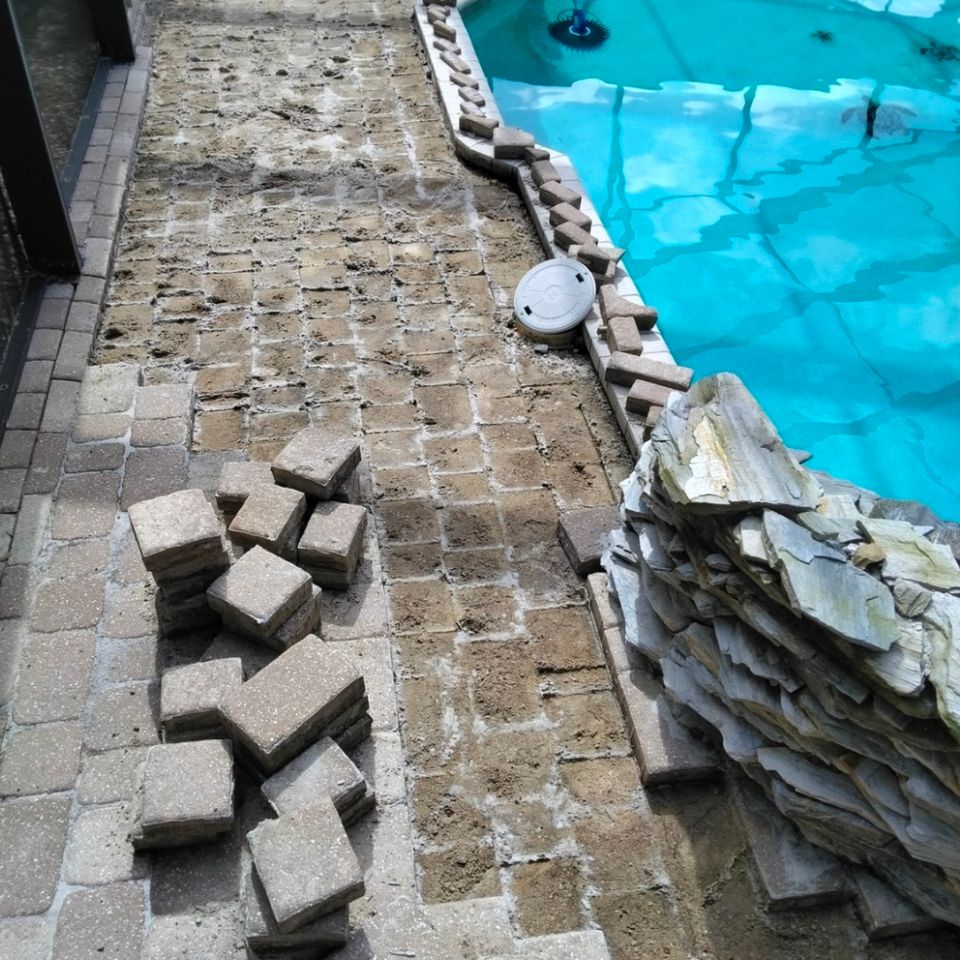
The process begins with a deep pressure wash to remove dirt, mold, and old sand from the joints. Once the area is clean and dry, new joint sand is installed to stabilize the stones. Finally, a professional-grade sealer is applied evenly over the entire surface to bond the sand and protect the pavers from environmental damage.
Most professional sealers require at least 24 hours of dry time before you can walk on the surface safely. For driveways, it is recommended to wait a full 48 to 72 hours before driving a vehicle over the treated pavers. This allows the product to fully cure and create a durable, long-lasting bond with the stone surface.
Yes, sealing is highly effective at reducing weed growth. The sealer hardens the joint sand, creating a firm barrier that makes it very difficult for seeds to take root. While it may not stop every single weed forever, it significantly lowers the amount of maintenance required and keeps the sand from washing away during heavy rain.
In the harsh Florida climate, pavers typically need to be resealed every two to three years. The intense sun and frequent rain break down the protective layer over time. Regular maintenance ensures the color remains vibrant and the stones stay protected from oil stains, mold growth, and the erosion caused by Volusia County's high humidity levels.
Yes, existing pavers can be resealed, but it requires a careful inspection of the previous coating. If the old sealer is peeling or turning white, it may need to be stripped away before a new layer is applied. A professional team ensures the new product is compatible with the old one to prevent a cloudy or uneven finish on your driveway.